During my one-week work placement at the International Bomber Command Centre in Lincolnshire I was involved in various projects and activities.

Work Placement Day One
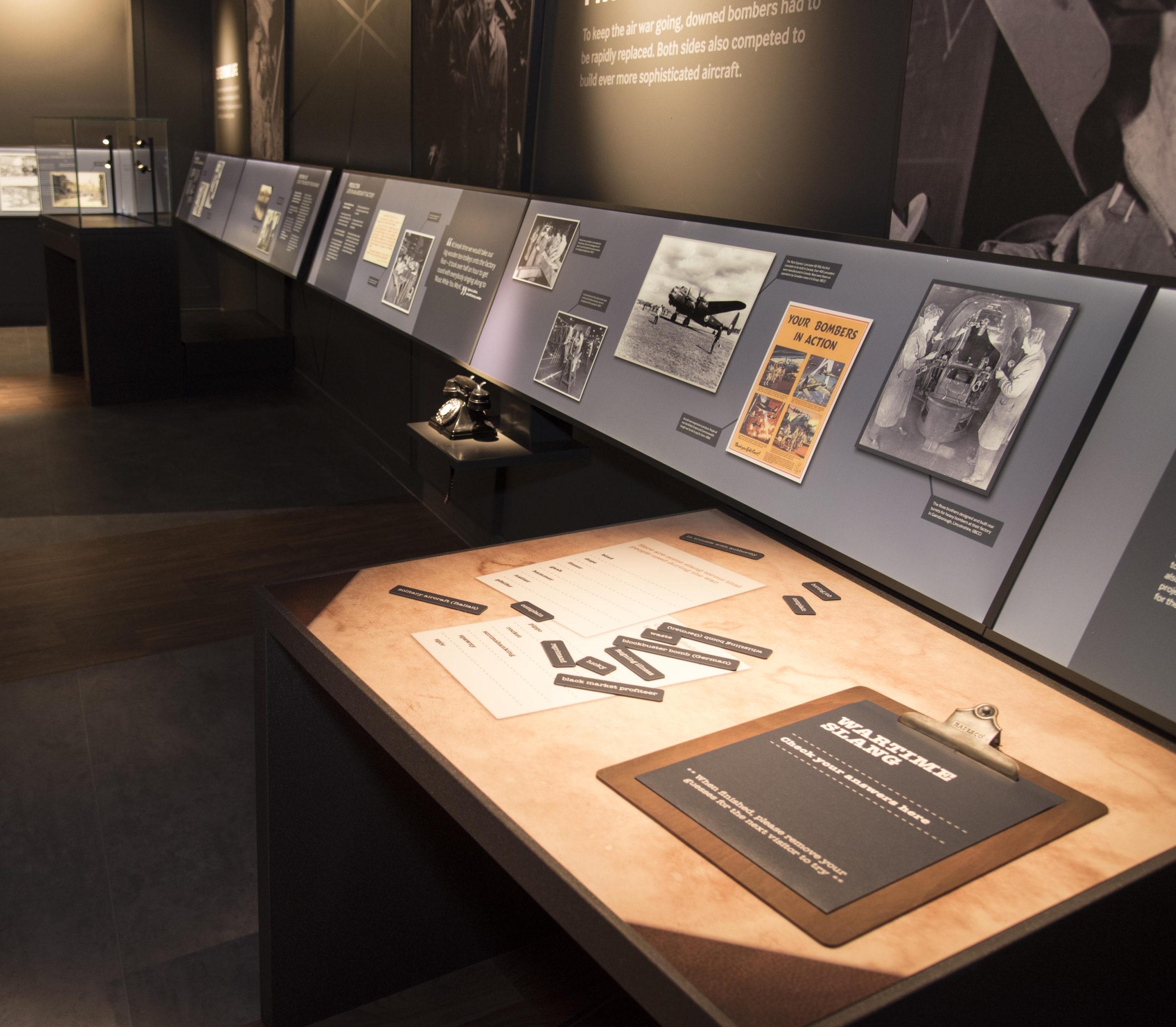
On the first day of volunteering at I took a tour of the centre’s exhibits and displays to familiarise myself with the core values and principles of the centre. They acknowledge the efforts, sacrifices and commitment of the men and women, from sixty-two different nations, who came together in Bomber Command during WWII. I was then invited to view the centre’s collection, select a number objects that peaked my interest and create posts to showcase the objects on social media. This was an interesting task to be involved in because I was given access to a variety of items that told the often-sobering stories of ordinary people who served with Bomber Command that I wouldn’t have otherwise had access to. For example, some of the log books I was examining came to an abrupt end with the words ‘missing in action’ printed in red. This hands-on experience also helped me to gain an appreciation for the real lives behind these stories which can often be hard to connect with by just simply looking at objects or trying to imagine what something was like.
Day Two
I helped in the Collections room, here I scanned family memorabilia relating to Bomber Command sent in by the public for preservation in the IBCC Digital archive. This task gave me insight into personal family stories, details of bombing missions, the many different roles performed by aircrew and the extreme danger they were exposed to. Furthermore, it was sobering to view aircrew engaging in activities such as ice skating during their down time in Canada – serving with Bomber Command gave many the opportunity to travel abroad which they may otherwise have never done. Scanning old photographs gave me insight into archiving techniques.
Day Three
I helped prepare for a Dutch school visit in March. This visit is of special importance as it marks the 75th anniversary of Operation Manna. For many who took part in Operation Manna, it was their last operation of the war. The Germans blockade had stopped food getting into western Netherlands and as a result many thousands had starved to death during the ‘Hongerwinter’. In response the RAF filled their four engine heavy bombers with food, not bombs, to drop on the Netherlands. We were working on a walking tour of Lincoln for the school. This experience opened my eyes to this incredible operation.
Day Four
On my final day, I undertook a trial run of the tour route, a crucial part of trail development. We discovered an Operation Manna memorial outside of Lincoln bus station featuring a wooden Lancaster surrounded by plant pots of tulips, it is missing a plaque but will be a welcome addition to the tour. At the centre I helped present collection items to a masters student who was researching the representation of aircrews. This was interesting as I was able to handle clothing and equipment worn bomber crews, again helping to tell their story. Later, I returned to the Collections room, my time there was cut short due to technical issues with the scanner. This gave me more time working on the walking tour, we eliminated unnecessary information and highlighted other parts that need more research.
Doing a work placement at the IBCC was an extremely valuable experience, it gave me an insight into potential career paths within the heritage sector which directly apply to the history degree I am currently studying. I realised how important it is to maintain the memory of all of those who suffered and served with Bomber Command for education.
Daniel Wright
University of Lincoln
Are you interested in becoming an IBCC volunteer? Click here for more information.
Daniel had a first hand insight into the treasure we keep in our collections. Our Digital Archive allows you to view these no matter where you are in the world and is available here