
The Reluctant Researcher
Roughly 21 years ago in a previous life I was working as a mobile Surgical Chiropodist, most of that work involved seeing people over 75 on a regular basis. Several clients rapidly became friends as it’s hard not to sit for an hour in someone’s house and not hear part of their life stories. More often than not WW2 popped up in conversation, this was not a subject we’d covered more than briefly in school and not coming from a family with any military background or history it was an area I knew little if nothing about.
My main hobby at that time was amateur archaeology, and our local area did seem to have quite a lot of both known and unknown Roman activity, and I’d been involved in several local projects exploring and recording Roman sites. So, when one of my regular farmer clients announced he had boxes of fragments of Roman Pottery he’d picked up over a period of 50 years in his barn, and would I like to look at it, I couldn’t wait to get out there to have a look!
True to his word there were several large boxes of different size shards of amazing pottery, I was in my element, but he was more interested in a piece of metal on top of one of the boxes, it looked like a bit of old tractor to me!!!
He kept coming back to this piece of metal and in the end distracted my attention away from the pottery with a request, the village he lived in wanted to do a Millennium exhibition in the Church to mark historic events and he felt this piece of metal was important to the history and could I research it for him.
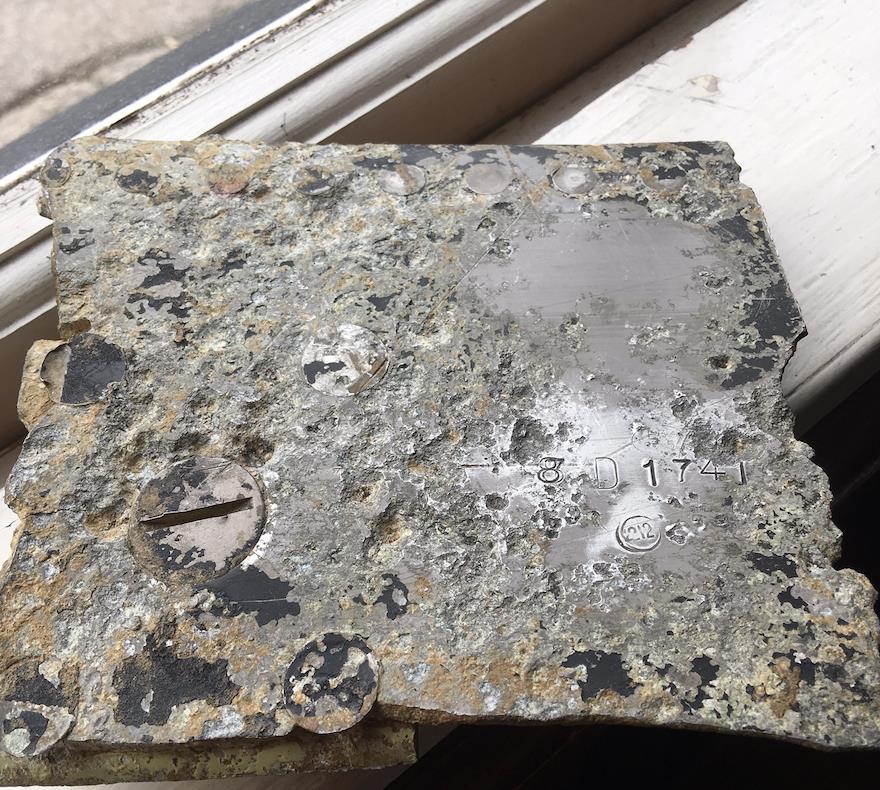
All he knew about it was it was part of wreckage from a WW2 accident on one of his fields. He had no idea of the date, just that it was winter, dark and very cold, he thinks there were 6/7 men killed as he’d had the terrible job of assisting the recovery team and he thought it was a Wellington.
With so little information to go on my only option was to read Chorley’s Bomber Command Loss books page by page….all of them….twice….as my first reading showed no Wellington’s lost there, and as Newark Air Museum found for me, the piece of wreckage was from a Lancaster. I can’t describe the emotions I experienced reading through those books, page after page of lists of names, I was shocked at my total ignorance of this event and humbled by some of the stories.
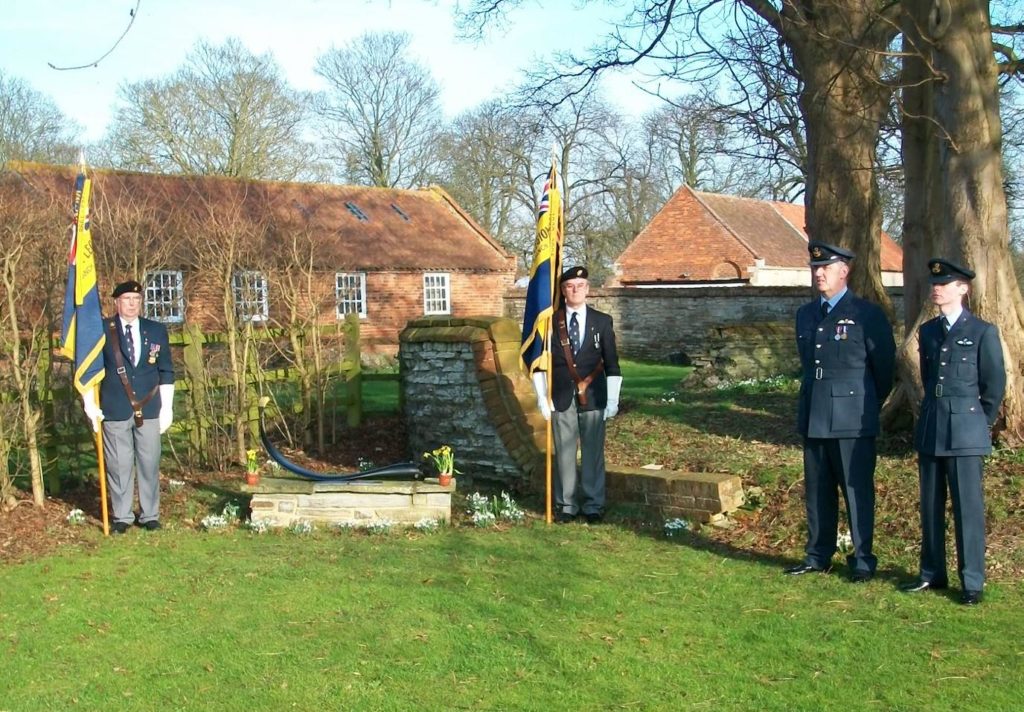
Along with a couple of others we did unpick the full story of Lancaster W4270 QR-T, although it took 11 years to find relatives for all the crew, we built a Memorial, and recorded a short film to tell their story, and I remember saying in the voice over how we wished all could be commemorated in such a similar way.
From that day on barely a day goes by when I don’t find/get a request for help, sadly the most common request is for photos and as my fellow researchers will know they are often the most difficult to find, I always hope that we can trace other crew members relatives who may just have one. So, from really not being at all interested in Bomber Command research it is now very much part of my daily life, still with probably only a 50% success rate, but hundreds if not thousands researched, but like many other similar researchers I now
know some of the first places to look!
This is why to me the IBCC is so important, the walls and Memorial are wonderful, a fitting tribute, but to me the importance is it has created a fantastic free to use and easily accessible research resource where families can send copies of any crew photos/documents, any research we do now as time move on needs recording if future generations are to be able to access and learn from it.
To search the archive click here
To find out more about the IBCC and how you can support our work please click here