
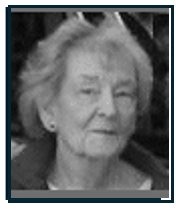
Jim and Christine Shortland were stalwarts of Lincolnshire aviation societies. They were founder members of the Sleaford and District Legionnaires Aviation Society (named after its meeting place). Original committee members from its founding in 1985, Christine served as Secretary. Both were committee members of the Royal Aeronautical Society, RAF Cranwell Branch; latterly the two societies collaborated on many activities. Unfortunately, RAES Cranwell did not survive Covid lockdown. SDLAS has been fortunate to hold its members together and revive programmes.
Over the years many distinguished speakers addressed the SDLAS. Thanks to Jim’s efforts SDLAS was privileged to have two visits from Eric ‘Winkle’ Brown, the famous WWII test pilot; Eric and his wife also shared a dinner event with core Society members. Indeed, SDLAS programmes are a litany of local and national aero-enthusiasts sharing their knowledge and experience.
As Christine was an efficient organiser and ‘fixer’, she and Jim made a good team. Jim pursued his interest in the history of 617 Squadron. How this came about is debated, but maybe from a chance gift of 617 photographs given by a former RAF neighbour who was moving house. He became obsessed with the history, which led him to organise coach trips to the Dams sites. These were immensely popular and established a community of attendees who met every three months for a lunch, initially at the Petwood Hotel and at the former Officers’ Mess, RAF Hemswell. In 2014/15, trips were also made to the V-bomb sites in Northern France, to the WW1 cemeteries of France and Belgium and to the Menin Gate. Those involved in these visits were not just Lincolnians. Many came from as far afield as the south coast and County Durham as well as what might be called Middle England; a great many friendships and contacts were forged in this community.
Jim became an in-demand lecturer and speaker on 617 Squadron history. His work was characterised by three praise-worthy features. He visited the places and met the people involved in the story: in this respect, his knowledge was without parallel. He was passionate about accuracy and cross-checked his information. He saw his work as a pursuit of truth, and that truth as something worth preserving for future generations. Having had only a rudimentary education, Jim was not a man of the written word; the aeronautics world has missed out because of that. While not the official historian of 617 Squadron, he was, to many, an unofficial guru. The Lincoln events which he and Christine organised were attended by many who were members of 617 Squadron and had taken part in the events. But Jim’s interest did not stop there: he had many contacts abroad who were able to take him to local sites from WW2 and provide detailed information on the ground.
Jim had an unsurpassed collection of 617 Squadron memorabilia from WW2, which included logbooks and facsimiles, hundreds of posters, scores of paintings, realia such as gunsights and pieces of uniform, and many rare books (the collection was broken up and auctioned in the last years of his life). This collection alone was an archive of immense value to history, and its dispersal is a tragedy.
In 2016, Jim was rewarded by the Royal Aeronautical Society (of which he was an Affiliate) with a Branches Award for his services to aviation. Part of the citation read:
“Examples of Jim’s local activity and standing include the following. He has held office in the nearby Sleaford and District Legionnaires Aviation Society (currently Deputy Chairman); and he works to provide joint activities between RAES & SDLAS groups to increase participation and cut costs. He is a life member of Grantham Aviation Society and a member of Lincolnshire’s Lancaster Association. He is a historian of issues concerned with 617 Squadron, and an author and lecturer about its history: his knowledge is encyclopaedic…His vast collection of artefacts includes a number on loan to such organizations as museums and St Vincents, war-time HQ for the Dams raid. He has raised significant sums for local memorials to the RAF in Lincolnshire.”
Jim lived for aviation and for the history of 617 Squadron. He was at home in the informal surroundings of the Legionnaires Club, home of SDLAS. He got immense pleasure from meetings at the RAF Cranwell Daedalus Mess, which housed the RAES Branch. His legacy is a quiet one, of enthusing others and provoking them to discover more. Like he once said of the history: ‘believe nothing and no-one; check everything.’