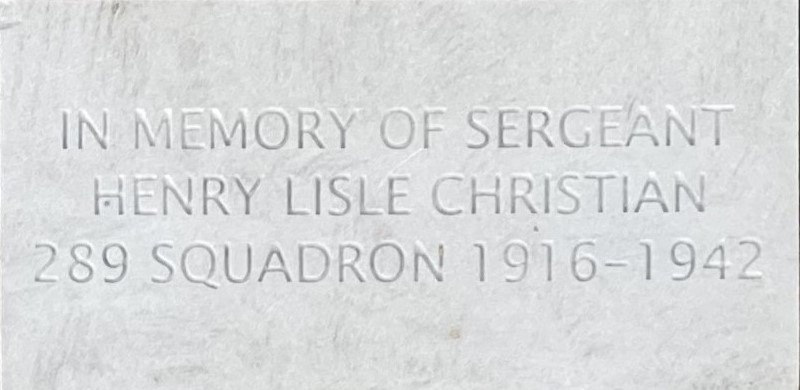
CHRISTIAN, Sgt. (W.Op/Air Gnr) HENRY LISLE 41572 R.N.Z.A.F. 289 (R.A.F.) Squadron
Henry Lisle Christian was born in Owhango, central North Island, New Zealand on 18 May 1916, the only child of Henry Christian, a native of the Isle of Man, and his wife Hilda (née Jacobsen).
His father, Henry senior, was working in the Owhango sawmills when he joined the 1st Battalion Otago Infantry Regiment and saw service with the First New Zealand Expeditionary Force (NZEF) in France during WW1. When he returned from the war he moved his family to Waimauku, a farming and fruit growing area north-west of the city of Auckland.
Prior to the second outbreak of war in Europe, young Henry worked as a farmhand with his father on their family farm.
During WW2, more than 100,000 New Zealanders served overseas and Henry was one of 7,000 air crew who joined the ranks of the Royal New Zealand Air Force (RNZAF).
He was a graduate of the BCATP (British Commonwealth Air Training Plan), a multinational aircrew training programme created to ensure a link with the nations of the British Commonwealth and one of the single largest aviation training programmes in history.
After graduating from BCATP as a Wireless Operator and Air Gunner, Henry was posted to RAF Kirknewton near Edinburgh in Scotland, which was home to a variety of units during this period.
289 Squadron was formed here in November 1941 as an Anti-Aircraft Co-operation unit and Henry joined the squadron, being promoted to the rank of Sergeant.
289 Squadron operated a number of different aircraft including Lysanders, Blenheims, Hurricanes, Hudsons and Defiants and their job was to provide practice for the anti-aircraft defences in Scotland by towing targets and conducting simulated attacks.
289 Squadron moved to RAF bases at Turnhouse (now Edinburgh Airport) in May 1942 and also to West Freugh, Dumfries and Galloway, both of which had expanded with concrete runways to accommodate heavier aircraft.
It was while stationed at RAF Turnhouse that Henry was the victim of a tragic accident which cost him his life. On 19th June 1942, he and his pilot were flying a Defiant Mark 1, a two seater turret fighter aircraft, taking part in an Army co-operation exercise.
Flying over the Moray Firth, 180 miles from their base in Edinburgh, the plane developed engine failure and ditched into the waters below. Although the pilot survived, Henry drowned before he could be rescued.
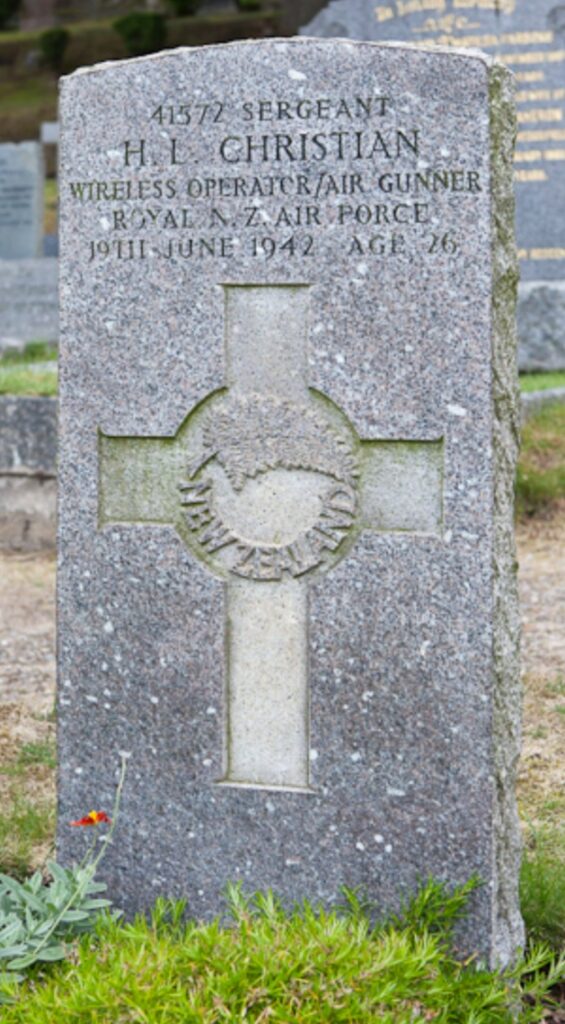
He was just 26 years old and was buried at Tomnahurich Cemetery, west of Inverness city centre. His grave is one of 169 Commonwealth War Graves in the cemetery, 80 from WW2, and one of only 2 New Zealander graves.
His grave can be found at Section H.14, Class 7, Grave 18 and commemorates a brave young man who made the ultimate sacrifice, and grieving parents who lost their only child half a world away.
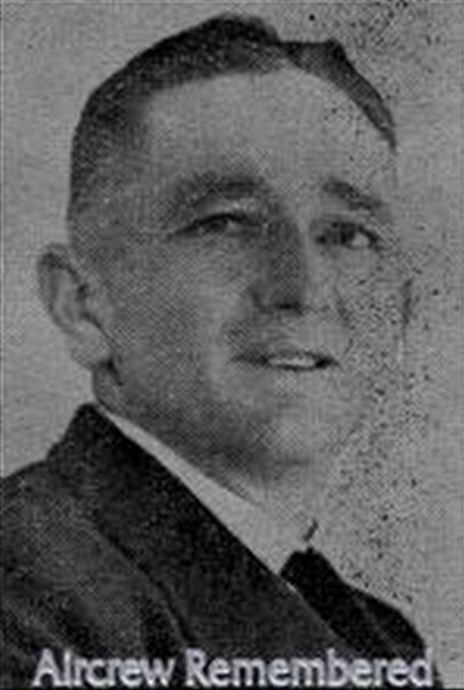
Henry was my first cousin once removed and, although I have no photos of him in my personal collection, I was fortunate to find a photograph kindly provided by ‘Aircrew Remembered’.