A TRUE FRIEND By Tony Trevor
This wartime recollection appears by kind permission of John Dimbleby
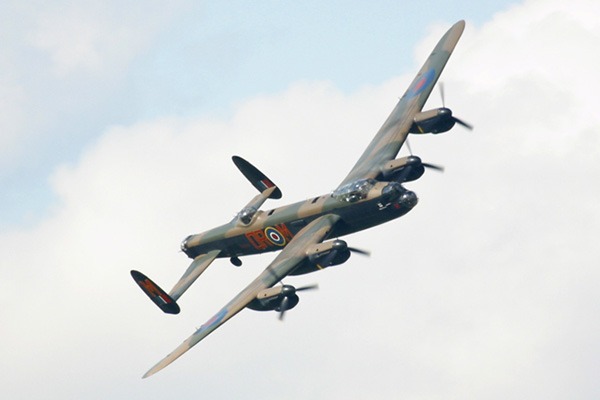
It is late afternoon on the 7th January 1944. Everett’s bus is doing its usual normally incident free village run back from Lincoln to Atterby. However, this time it is different. The loud screaming noise of a Merlin engine in trouble was the first thing that turned the passenger’s attention away from their thoughts of everyday things. Then the sight of the flames quickly destroying the wings and spreading completed the horrific sight before them. One of our Lancaster’s had crashed and it looked bad. There was nothing for the shocked inhabitants of the bus to do but continue their journey and hope and pray that everyone was all right. In situations such as that a person can feel impotent and useless. You wish there was something you could do to help. However, for one passenger; Emma Sellars, when she alighted at Bishop Norton she knew that she had a task to do, and after depositing her shopping at home, she set off to fulfil it.
Dunholme Lodge is an area squeezed in between the A46 and the A15 about two miles to the north of Lincoln. For fifteen months during 1943 /44 it served as a Bomber Command base for 619 and 44 (Rhodesia) Squadrons. One of the new recruits to the latter, was Claude Dimbleby, who took up his post as a Mid- Upper Gunner on the 31st of May 1943. This also coincided with his 20th birthday. Being a local lad, his home was just a few short miles away in Bishop Norton, so he had the opportunity of being able to sleep in his own bed much of the time. In contrast his pilot, Flight Sergeant Matheson, a Canadian, did not see his homeland for two and a half years. What he, Claude and the others did see was quite a lot of Germany. Their mostly nocturnal visits took them to places such as Hamburg, Berlin, Munich and they even popped over to Milan on one occasion.
Most crews were expected to complete thirty missions but after 27, Flt Sgt SA Matheson was seconded to a training unit. The rest were stood down but Claude had, through a bout of sinus trouble missed one trip, so was put on stand-by, ready to fly with a crew who found themselves a gunner short.
The moment arrived when Flying Officer Mercer and his crew happened to find themselves in need of a rear gunner and Claude was required to make up the numbers. This would not be his usual slot, but the Mid- Upper Gunner of W-William, Sergeant Bill Welch, offered to swop places. “I’ve had no real experience of that position” he told Claude, “so I wouldn’t mind giving it a go.”
They left Dunholme Lodge and headed for some practice firing ranges on the Wash. It was on their return that things started to go badly wrong. I will let Claude take up the story:
‘Engine overheating caused an overshoot of the east/west runway. This overheating then prevented us attaining enough airspeed to go round again. The inevitable was going to happen. We flashed past a wind pump tower at Grange-de-Lings Farm, a frightened worker fleeing down a ladder as fast as he could. From my position, I could see we were not going to clear a line of trees that now represents the northern boundary of Riseholme College.’
The damage was extensive. I’ve already described the flames, but all propellers were smashed, and Claude’s turret had lost its top, courtesy of a tree bough.
The crew beat a hasty retreat, but a head count revealed one member missing; Bill Welch although still conscious, could not make his escape due to his legs being trapped. His crew mates made frantic attempts to free him, but to no avail. When the medics came on the scene, all they could do was as Claude describes it, ’give him an injection to take away his pain before the flames arrived!’ How awful. That does not even bear thinking about.
Claude, Bill Welch and all their comrades were volunteers, young, brave lads. Acts of selflessness and courage come in all forms however, as Emma was to prove that night. She was a close friend of Claude’s Mum, and when she realised there was a good chance that her friend’s son may well have been on that plane, she made it her business to pay a call. Nothing was said about what she and the others had witnessed from the confines of the bus. To Claude’s Mum it was just her friend calling for a cuppa and a chat, even if to Minnie’s surprise she did stay rather longer than usual. Emma’s heart must have skipped a beat when the phone rang, and she realised the call was from the base! Claude’s survival, coupled with Bill’s death must have induced mixed feelings that night. If the outcome had been less in Claude’s favour, she was there ready to give support. To my mind, she was another wartime unsung heroine.
On the 60th anniversary of the accident at 3-20 pm, Claude’s son John laid a wreath on the spot, in memory of Mid- Upper- Gunner Sgt William Harold Welch.
For more information on the project or to search the Losses Database or Digital Archive please click here