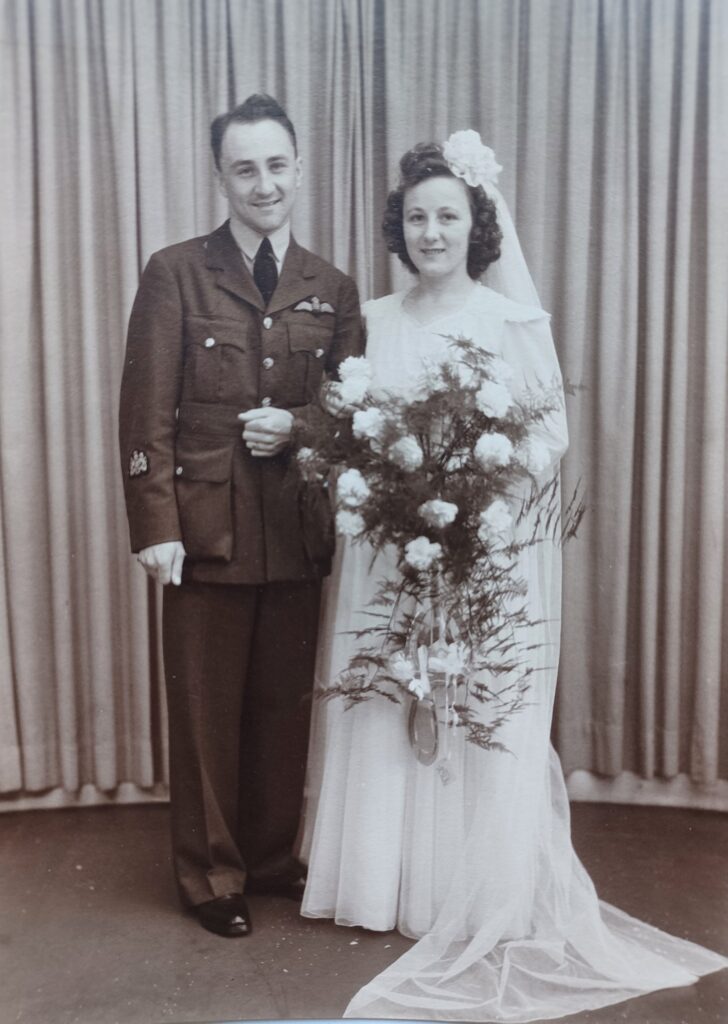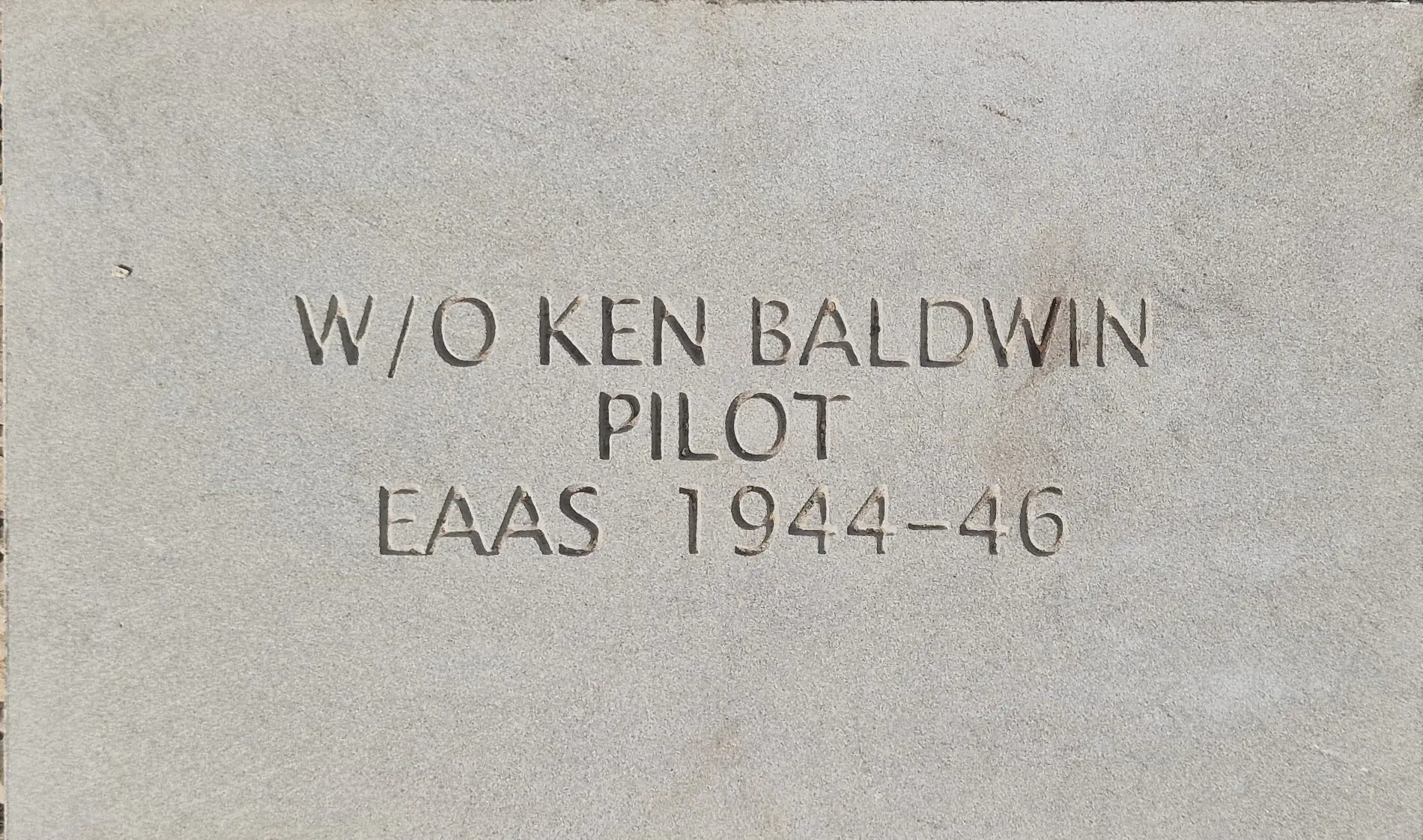
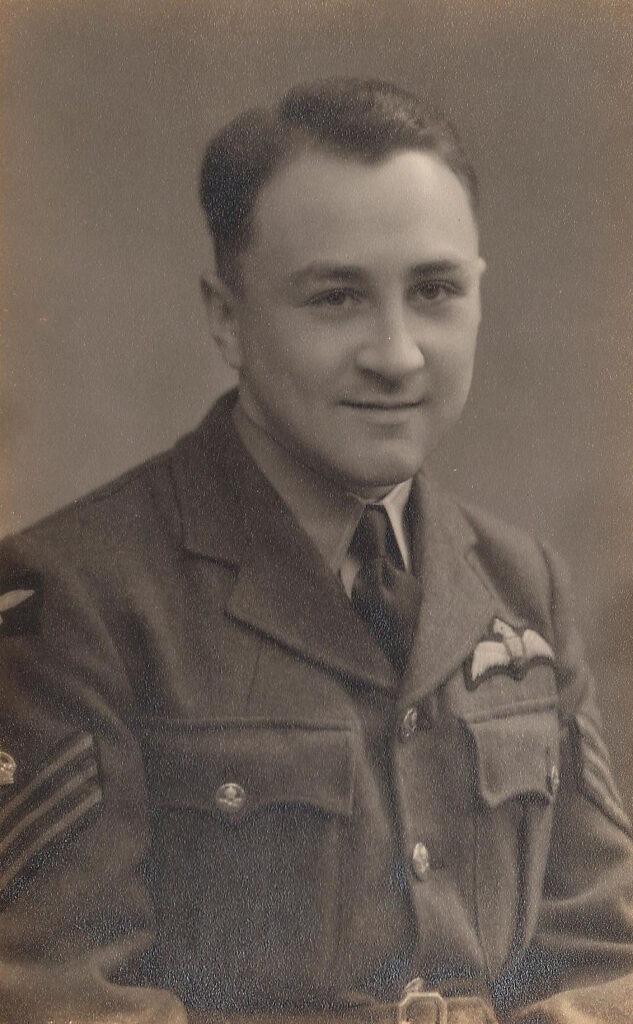
Kenneth Robert Henry Baldwin, known to everyone as Ken, volunteered for the RAF in 1940, having been born in March 1921. His entry was delayed due to a broken arm but selected for pilot training his first flight was in March 1942. He was sent for pilot training in the US on the Arnold Scheme as part of Class 43A arriving via Canada. Issued with a Royal Canadian Air Force Logbook, his first flight and solo were in July 1942. He was sent south to Alabama first to undergo an orientation course into the “strange” US ways and then to join with US cadets to be taught how to fly by civilian instructors. The local residents made him very welcome, one in particular, Mrs Barrett, took him under her wing as a surrogate mother. As the US had only just entered the war he was still subject to their peace time “Bull“, something which he told me the English cadets tried to avoid as much as possible, also the strict discipline was not at all what the RAF cadets were used to as they were more interested in learning to fly and then a speedy return to England.
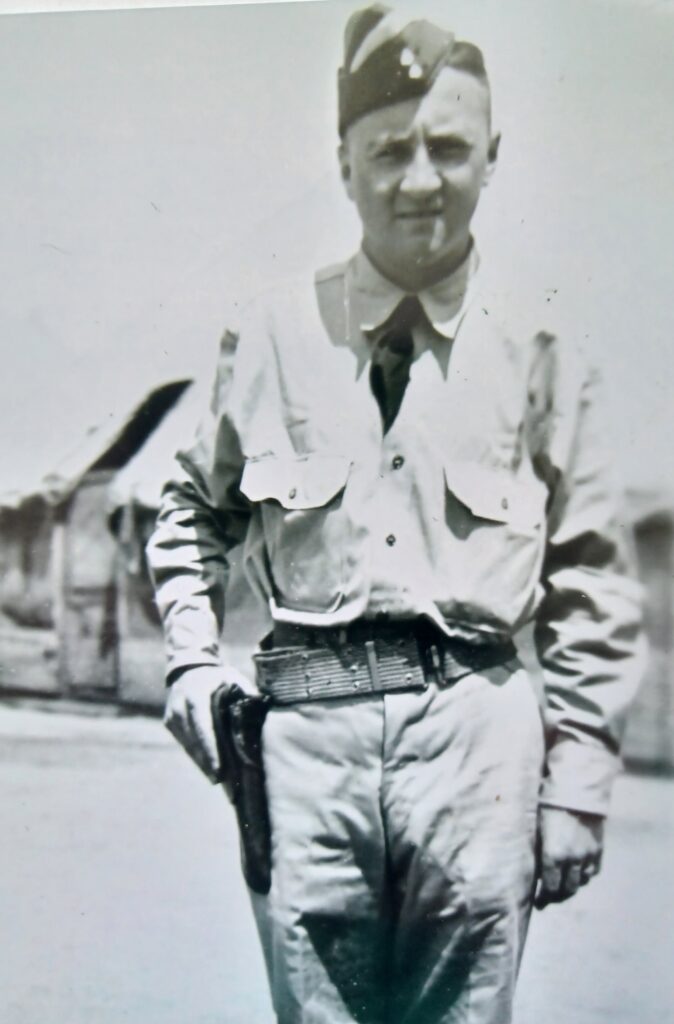
His training was in Albany, Primary at Darr Aero Tech, Basic at Gunter Field and Advanced at Turner Field where he gained his USAAF (United States Army Air Force) wings in January 1943. While in the US he flew the PT17 Stearman, Vultee BT13, Cessna AT17 and Curtis AT9. He also made firm US friends and corresponded with them for the rest of his life.
Back in England his service was interrupted by another broken arm. As he was assigned to multi engine aircraft he spent the second half of 1943 training on two engine types (Blenheims, Ansons and Beauforts) ending up at 54 OTU (“Slaughter” Hall) to transition to Beaufighters for Operations. His first flight as No 1 pilot didn’t go well as he overcompensated for the torque of the engines resulting in a ground loop and a close shave with the control tower. He said he had never seen people leave a building as fast as those in the tower as he careered towards it. Luckily there was no real damage done but his flying career nearly ended.
He was reassessed and was posted as a staff pilot to No2 (O) AFU at Millom in Cumberland flying Ansons, although he was promoted to Flight Sergeant. He spent his time at Millom stoodging up and down the Irish Sea with trainee navigators on board. As they flew quite low he always knew where Snaefell (highest point of the Isle of Man) was as the accuracy of some of the navigators (even quite high-ranking ones) wasn’t that good. As Millom was right on the coast, they had an amphibious vehicle to go and collect any crews who were unfortunate enough to ditch on their approach. The local lifeboat was also launched in such instances, and he said the unfortunate crew always paddled like mad towards it away from the base so they could get a night in the local town. Luckily it never happened to him.
At the end of 1944 he was promoted to Warrant Officer and posted to the Empire Air Armament School at Manby in Lincolnshire. Here he flew Wellingtons (Mark X, XIII and XV) training bomb aimers. He said his accuracy at bombing was always better than the trainees as he would “throw” the bombs out (twitching the aircraft at the critical moment) and always hit the target. As the only rated Anson pilot on the base, he also flew admin trips in the base Anson and Oxford. Any passenger was always given the job of winding the twenty-eight turns to raise and then lower the manual undercarriage. In fact, he considered the Anson his own private aircraft akin to the first car that he had just managed to buy.
At the end of the war he married my mother, his long-term girlfriend in June 1945. He continued to serve at Manby until June 1946 when he was demobbed having accumulated 915 hours as first pilot. He returned to his hometown of Walsall where he developed a very successful business, became a local preacher in the Methodist Church and served as a JP for many years before his death in November 2010.