Had I not been thrown off my seat, the top of my head would have been sliced off like a breakfast boiled egg.
Hit by flak on a daylight raid over Leipzig Sergeant John Pearl – aged 19 in 1945 when he served with No 207 Squadron based at RAF Spilsby, Lincs.
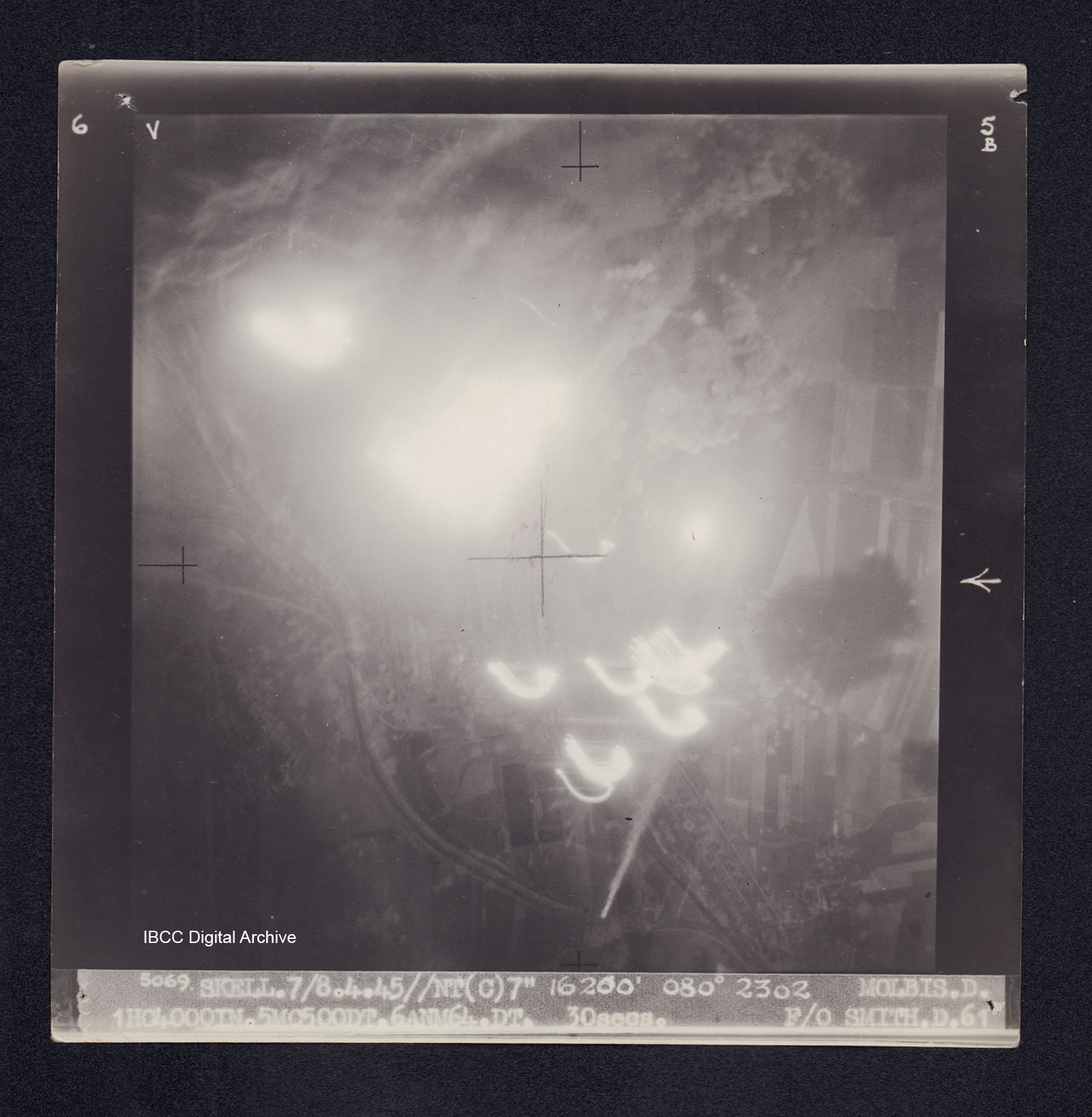
‘Pathfinder marker flares were going down as we began moving across the target – the railway yards at Leipzig. Some light flak appeared ahead of us but it was spread thinly around the sky and did not look too formidable. However, black puffs of smoke from the bursting shells of predicted heavy flak seemed dangerously close and as we continued our run across the target it was one of these shells that exploded alongside, between the two starboard motors.
It shook the plane, throwing us around the sky, causing me to slip off the little hammock that served as a seat in the mid-upper turret. I fell backwards on to the floor of the aircraft. I lay there for a few seconds as shrapnel ripped through the aircraft, sounding like hail stones on a tin roof. The skipper steadied the aircraft and I climbed back to my turret to find it badly holed with most of the cupola Perspex blown away. A lot of the metal framework which had been supporting the Perspex was twisted and mangled and I sat there like a World War I air gunner with my head out in the fresh air. Had I not been thrown off my seat, the top of my head would have been sliced of like a breakfast boiled egg.
It was freezing in the shattered turret now and it could only be rotated by the winding handle as the hydraulics had been shot away. My guns did not work either, so I was reduced to the role of lookout.
Both starboard engines were damaged, losing oil, and had to be feathered but after a quick discussion amongst the crew as to what we should do, we continued on two engines and bombed the target from 14,000 feet. Leaving the target area, we were hit by flak on the port side. Ninety, limping minutes later, oil pressure began dropping fast on the port inner engine and the pilot told us to prepare for baling out.”
The crew baled out successfully, except for the pilot, Flight Lieutenant Peter ‘Andy’ Anderson, who was killed when the aircraft crashed near the village of Burgbrohl. The rest of the crew were picked up by American GIs and quickly repatriated.’